It would not shock fast-food fans to know that Burger King and Wendy’s, two of the most widely known burger joints in America, come from similarly humble beginnings. Burger King, like Wendy’s grew from a desire to serve low-cost, fresh food options to people who wanted to have a modestly delicious meal. First opened in 1954, it was the hope of Burger King founders to offer a family-friendly dining experience, where regular people could relax and enjoy themselves.
As discussed in my last post, Wendy’s hails from a parallel upbringing, and the two chains have grown together throughout the years, both boasting thousands of restaurants in the U.S. and elsewhere.
Wendy’s has continued to grow in popularity on social media due to their quick wit and silly interactions with followers, and other brands have picked up on it – specifically Burger King. The Twitter team at BK has seemingly adopted many of the practices that Wendy’s exemplifies, earning them notable success in the social media world. Check out the three ways in which Wendy’s and Burger King have similar social media practices:
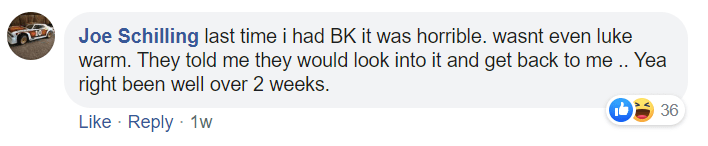
Burger King & Wendy’s miss the mark on Facebook
Burger King and Wendy’s have a similar follower count on Facebook – both brands have more than 8 million likes. According to my classmate Haley’s audit of Burger King, their social media team posted on Facebook only twice during her 7-day examination of their social media usage as a brand. This is akin to Wendy’s usage of Facebook – both brands fall short of posting frequently and in a succinct pattern to keep a large margin of their followers interested and engaged on the platform.
They fail to follow the advice of Alex York’s Sprout Social article, “The 6 Fundamental Facebook Best Practices,” – York tells readers to post frequently and timely, including that they should post at least once per day. Imagine the success that Wendy’s and Burger King might have if they were able to reach more of those eight million followers by increasing their posting on Facebook.
Burger King & Wendy’s use humor to connect with followers
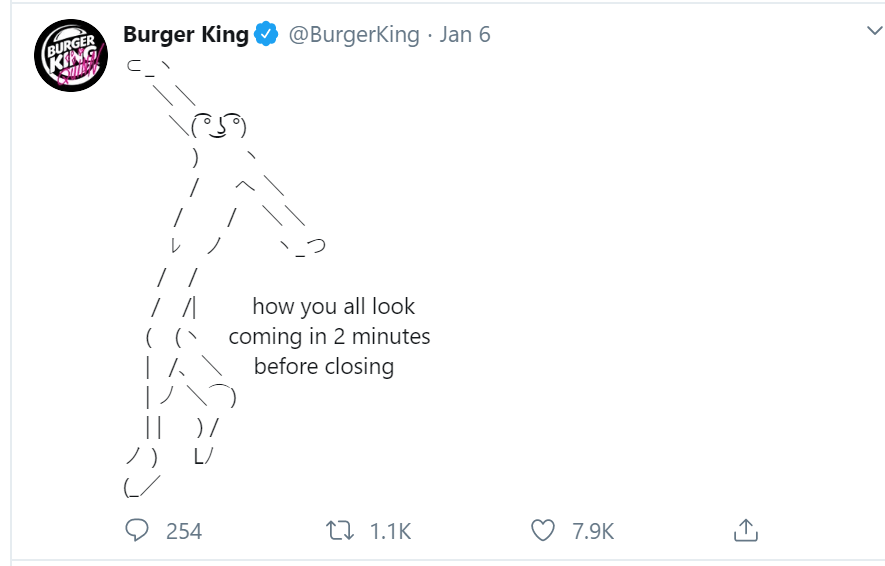
It’s become clear that the best way to engage with Millennials and Gen Z’s on social media is to laugh with them or at them – both Burger King and Wendy’s try, and are often successful, in making connections with their followers through humor. On January 6, 2020, Burger King tweeted a figure of a person dancing made out of commas and dashes that said, “How you all look coming in [two] minutes before closing,” poking fun at the fact that customers often waltz into the restaurant just as the employees are about to pack up and leave. The tweet received positive response from fans, many of whom replied with their own comedic take – one fan even recreated the dancing figure holding a takeout bag and wrote, “I got my food tho.”
Matt Silverman’s Mashable article about how to be funny on Twitter urges users to take a risk and test the waters a bit when it comes to making comedic content – Burger King and Wendy’s certainly do so by openly making fun of their followers. Like Burger King, Wendy’s will often insult followers, even if they are complimenting the brand. On October 23, 2020, a follower tweeted at Wendy’s saying that they would, “sell [their] soul for a Dave’s Double from @Wendy’s.” The Wendy’s Twitter team snarkily replied, “[A] Dave’s Double is definitely worth more than that.” The tweet received favorable response, and both brands proved their ability to make fun of customers while still meeting their needs.
Burger King and Wendy’s are quick in replying to followers (at least on Twitter & Instagram)
As mentioned in my last post, Wendy’s Twitter Team does an excellent job of quickly, and entertainingly, replying to fans and followers. Wendy’s is fast to reply, sometimes even getting back to followers within moments – though they don’t typically practice this same diligence on Facebook, Wendy’s also responds to fans quickly through Instagram.
According to Haley’s audit of Burger King, they too take responding to followers seriously on both Twitter and Instagram, but have a hard time communicating via Facebook. Social Media Today teaches about Facebook best practices for businesses, and highlights the importance of responding to all comments, but Wendy’s and Burger King both fall short of that. They do, however, have an astonishing amount of consumer engagement on other platforms and seem to have great success there – all things considered, perhaps Facebook usage is no longer important for the growth of their brands.
#Twinning
Wendy’s and Burger King are incredibly similar businesses and have followed the same path of success for the last few decades – even their use of social media as a branding tool is alike. Whether it’s their lack of Facebook use, their quirky humor, or their close connection with followers, the two brands are looking for growth in all of the same places.
Let me know in the comments: which chain is better at using social media to interact with fans, Wendy’s or Burger King?
 Gennie's Social Media Blog