Branding goes far beyond the buying and selling of goods – great brands create brand love with their consumers, earning the loyalty and appreciation over time. How do they do it? They make their brand a staple in the customer’s life, becoming irreplaceable. Whether a brand has simple good-hearted nature, or it highlights certain aspects of the customer’s personality or lifestyle, great brands see an opening in the heart of the customer and fill it as best they can.
Social media expert Monica Gomez-Suarez examined customer-brand relationships and how to understand brand attachment, love, and engagement – the findings from her 2019 article were featured in the Journal of Administrative Sciences. She wondered if passion for a brand is really, categorically love, or simply attachment; Adele Giangiulio explains in an educational summary of this article that Gomez-Suarez found brand love to relate more with passion for a brand, and engagement with a brand was likely to show long-term loyalty and consumer-ship. Read on to understand why brand love is important, and how it can be cultivated through social media engagement.
Consumers are special – treat them that way
Each consumer is a unique element of a brand’s success – as found in Okazaki’s 2019 article published within the Journal of Business Research, personality plays a large role in purchasing behavior. Okazaki and his team evaluate how individual personalities of consumers make them 1.) more likely to engage with brands and create brand love and 2.) how some personalities are predisposed to have passion for and love the brands that they engage with – in his terms, “personality can be an important driver of the internalization process of passionate activity.”
Brands should be cognizant of the importance of interacting with consumers – if customers are reaching out to interact, they are likely to be open to brand engagement and love. Wendy’s Twitter team does a fantastic job of interacting with customers, as I’ve mentioned in earlier posts – they take the time to respond to hundreds of disgruntled customers, as well as many fans of the brand.
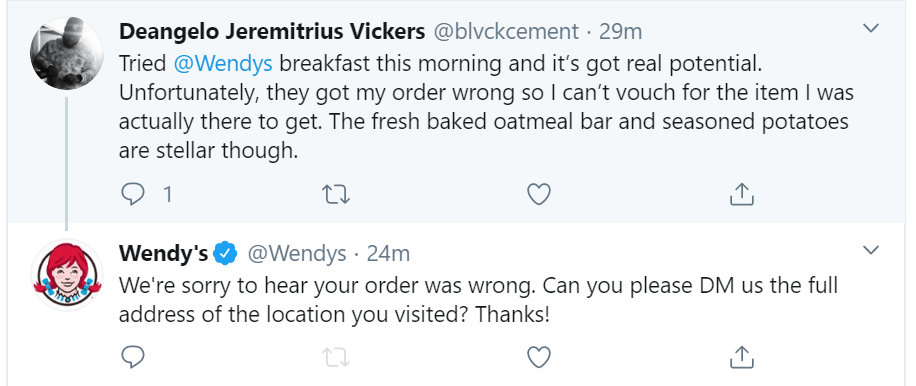
Even when something goes wrong within the restaurant, the brand’s engagement online helps them to stay connected with customers and address their grievances as well as their excitement, and with other four million followers on Twitter, Wendy’s is certainly bridging the gap between business and consumer.
Consumers want to be involved – involve them
User generated content is everywhere on social media – whether beauty products are being evaluated on YouTube, or Facebook communities for new moms are sharing their favorite hacks, social media users and consumers are creating their own content to discuss the products and brands that they love.
Roma and Aloini’s 2019 article published in the Journal of Business Research, discusses the importance of user generated content (UGC) and how it can be used by brands to improve brand loyalty and love. Alyssa Golden wrote a thorough summary of this article in which she warns that UGC changes shape and form across platforms – it’s not portrayed the same way on Facebook as it is on YouTube, Twitter, and so on. Brands should consider the type of UGC that is out there about their products and potentially even include that UGC in their own marketing campaigns, but it is pertinent for them to understand the differences between each platform.
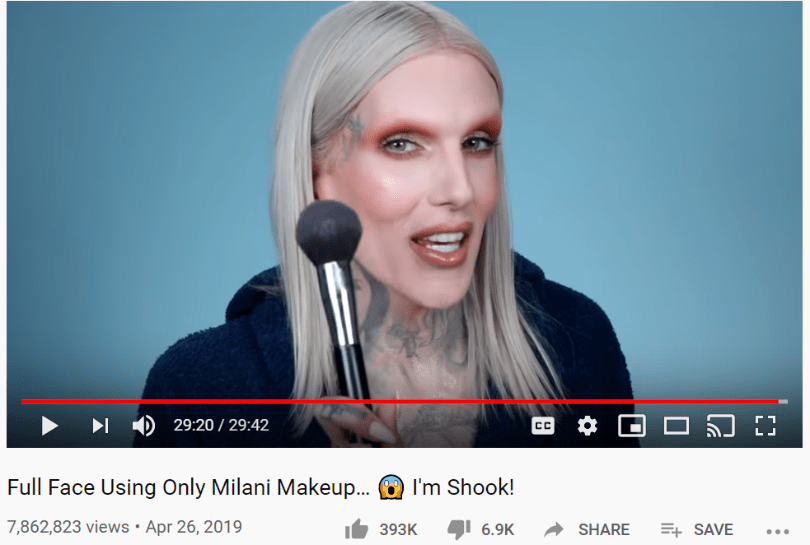
Roma and Aloini’s research suggests that customers are most likely to respond to marketing campaigns through Facebook, but as time goes on, Twitter, YouTube, and various other platforms are becoming the place for consumers to publicize their opinions – and some social media users have the audience to make or break a campaign. Jeffree Star, makeup mogul and YouTube super star, can easily sway the public’s opinion on a new beauty product through his popular channel; it’s pertinent that beauty brands stay up-to-date on his postings and opinions, as well as the comments on his videos, to understand the favorability of their products.
Consumers are active – don’t fall behind!
Social media has completely changed the way that brands and businesses interact with consumers; creating brand love through interaction and engagement with social media users, as well as understanding UGC and its impacts, will assist in staying within the consumers’ hearts and consumers’ shopping carts.
What do you think is important for brand engagement? Do you feel brand love? Comment below!
 Gennie's Social Media Blog